Dust Off the Old Ways: How Makers Are Turning Forgotten Craft Techniques Into the Ultimate Act of Defiance

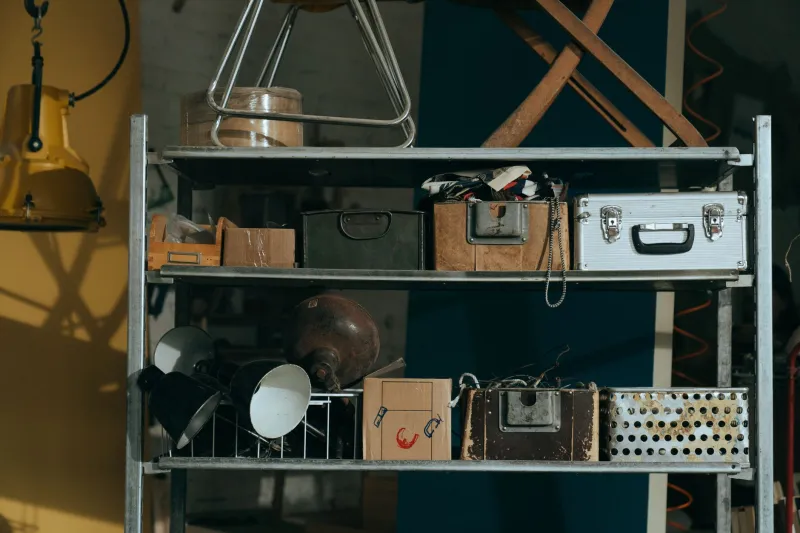
Photo by Photo by Roman Kraft on Unsplash on Unsplash
Forget the algorithm. Forget the trending audio and the satisfying resin pour and the three-minute room transformation. The most subversive thing a maker can do right now — and we mean this with our whole chest — is sit down with a bundle of indigo and a pile of undyed cotton and spend an entire afternoon doing something your great-grandmother would have recognized immediately.
Slow craft is back. Not as nostalgia. Not as cottagecore aesthetic. As rebellion.
The Quiet Revolution Happening in Basements and Back Porches
Across the country, a loose but passionate community of makers is resurrecting techniques that mass production tried to make obsolete. Hand-binding books with linen thread and bone folders. Carving wooden joints without a single screw. Fermenting natural dye baths from plants foraged in the backyard. Spinning fiber on drop spindles that predate the industrial revolution by several centuries.
None of this is fast. None of it is cheap in terms of time. And none of it photographs the way a glossy craft kit does. Which is exactly why it feels so radical.
"Everything right now is optimized for the content," says Delilah, a natural dyer and fiber artist based in Asheville, North Carolina, who teaches hand-dyeing workshops out of her home studio. "The craft exists to be filmed. I wanted to do something that basically refuses to be a video. Natural dyeing is slow, it's unpredictable, and the best results happen when you're not watching. You can't really TikTok that."
She laughs when she says it, but she means it.
What Makes a Technique "Forgotten"?
Let's get specific, because "traditional craft" can mean a lot of things, and not all of them are equal in terms of what they're pushing back against.
The techniques that are generating the most underground buzz right now share a few characteristics. They're labor-intensive in ways that machines genuinely cannot replicate. They produce results that are irreducibly individual — no two pieces come out the same. And they require a relationship with materials that modern manufacturing has almost completely severed.
Hand-bookbinding is a perfect example. The Coptic stitch, a binding method that dates back to early Christian Egypt, creates books that lay completely flat when open and can be repaired rather than replaced. You can feel the structure of the book in your hands. You made the thing that holds the thing. There's a meta-satisfaction to it that a spiral notebook will never touch.
Traditional woodworking joinery — mortise and tenon, dovetail, bridle joints — tells a similar story. Furniture built with these methods doesn't just last longer than flat-pack particleboard. It ages differently. It develops character. It can be disassembled, repaired, and reassembled. It is, in the most literal sense, a different kind of object than what you'd wheel out of a big-box store.
"I made a chair using hand-cut dovetails," says Jerome, a self-taught woodworker in rural Tennessee who picked up traditional joinery from a combination of old library books and a retired furniture maker who lived down the road. "My grandfather sat in that chair and said he hadn't seen joinery like that since he was a kid. That hit me harder than any compliment I've ever gotten."
Sustainability That Doesn't Need a Label
Here's where the old ways get genuinely, practically compelling: they're sustainable in ways that don't require a certification or a marketing department.
Natural dyes derived from plants, insects, and minerals produce colors that synthetic dyes can't quite replicate — and they do it without the petrochemical runoff that makes conventional textile dyeing one of the world's worst industrial polluters. A piece dyed with black walnut hulls or madder root isn't just beautiful. It's evidence of a different relationship between maker and material.
Hand-bound books, traditionally jointed furniture, hand-thrown pottery — these objects are built to be repaired, not replaced. In a culture that treats almost everything as disposable, making something that's designed to outlast you is a genuinely radical statement.
Delilah puts it bluntly: "I'm not trying to save the planet with my indigo vat. But I'm also not contributing to the part of the textile industry that's actively poisoning rivers in South Asia. That matters to me. The old way is the cleaner way, and I don't think that's a coincidence."
The Community Forming Around the Slow
One of the more surprising things about the heritage craft revival is how social it's become. These aren't solitary pursuits practiced by hermits in remote workshops. They're gathering points.
Guild structures — actual guilds, with members and shared resources and collective knowledge — are making a comeback in cities where you'd least expect them. There are natural dye circles meeting in community gardens in Chicago. Hand-papermaking collectives sharing equipment in Oakland. Spinning guilds in suburban Minnesota that have been quietly operating for decades and are suddenly finding a new generation of members who stumbled onto them through a Reddit thread.
The knowledge transfer happening in these communities is remarkable. It's not just technique. It's context — the why behind the how, the history embedded in a particular stitch or joint or dye process. When an 80-year-old spinner teaches a 25-year-old the long draw, she's handing over something that no YouTube tutorial can fully convey.
"I learned to hand-bind from a woman in her seventies who learned from her mother," says Tomás, a bookbinder and zine maker in Philadelphia. "She knew things about paper grain and adhesive behavior that I've never seen written down anywhere. That knowledge would have just disappeared. And now I teach it to people at my studio, and they'll teach it to someone else. That's the whole thing. That's the point."
How to Start Breaking the Rules the Old Way
You don't need to apprentice with a master or enroll in a heritage craft program (though both are great if you can swing them). Start with a library card and a willingness to make ugly things for a while.
Old craft manuals — the kind published before the internet, written by people who assumed you had no shortcuts available — are some of the best instructional material in existence. They're thorough in a way that modern content rarely is, because they had to be. Look for them at used bookstores, estate sales, and your local library's reference section.
Find your local guild. They're almost certainly there, even if they're not advertising. Search for spinning guilds, weaving guilds, bookbinding groups, woodcarving clubs. Show up. Be the youngest person in the room if you have to. It's worth it.
And then make something slow. Make something that takes longer than you think it should. Make something your grandmother would recognize. In a world built for speed, that's the most outlaw thing you can do.