Junk Store Alchemy: How Cast-Off Relics Are Becoming the Most Honest Art in the Room
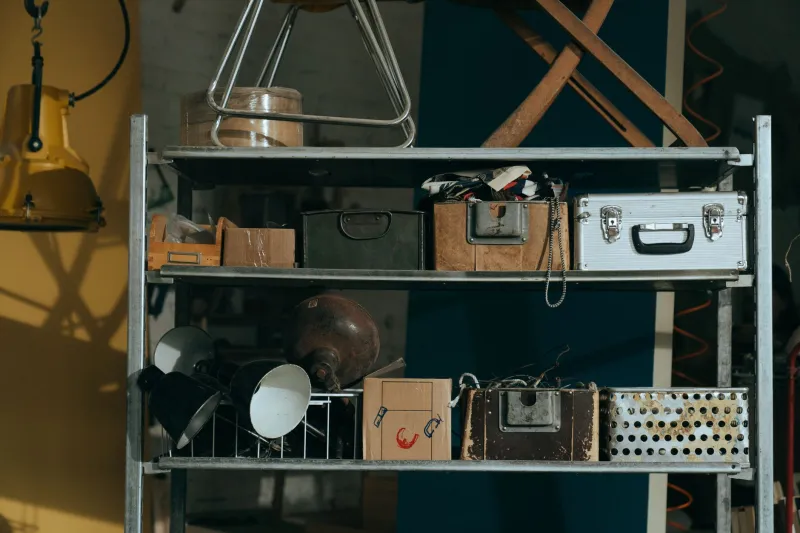
There's a lamp at a Goodwill somewhere right now — brass base, ugly shade, probably from a condo in 1987 — that is one creative vision away from being the most interesting object in someone's living room. Most people walk past it. A certain kind of maker picks it up, turns it over in their hands, and starts seeing something else entirely.
This is the world of cast-off craft, and it is absolutely thriving.
The Thrift Store Is the New Supply Shop
Walk into any serious crafter's workspace these days and there's a decent chance the most compelling materials in the room didn't come from a craft supply store. They came from an estate sale in a suburb of Cincinnati. A Salvation Army in Phoenix. A curbside pile in Portland. A flea market in rural Georgia where an old woman was selling her late husband's entire woodshop for twenty dollars a box.
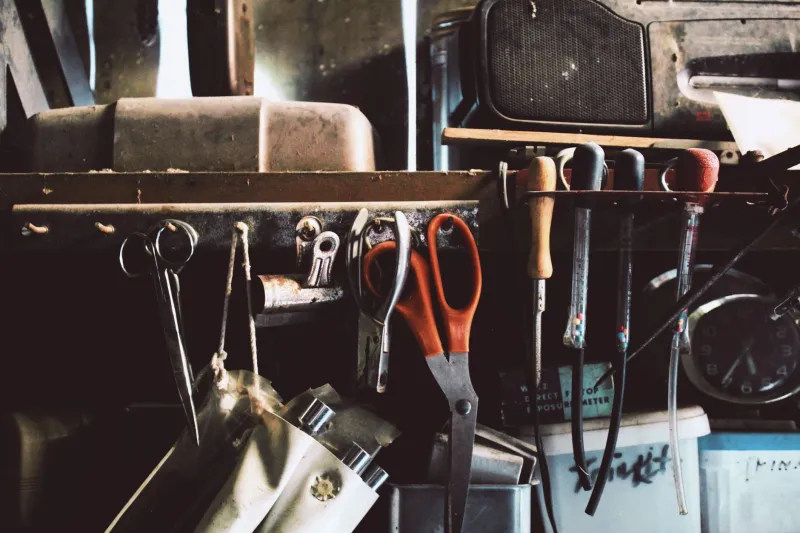
Makers who work this way tend to describe it less like shopping and more like archaeology. You're not looking for something specific — you're reading what's there and letting the material tell you what it wants to become. A cracked wooden dresser with beautiful bones. A stack of embroidered linens from a farmhouse estate. A box of tangled analog electronics with components that haven't been manufactured since Reagan was in office. All of it raw material. All of it carrying a history that brand-new supplies simply don't have.
And increasingly, that history is the whole point.
Why Imperfection Became a Statement
We've been living through a long hangover from the era of Pinterest perfectionism — the period when every craft project was supposed to look like it came off a production line, every color palette was neutrals and shiplap, and anything that showed its age was a flaw to be corrected. That aesthetic exhaustion is real, and a lot of makers are done with it.
Working with thrifted and salvaged materials is almost an automatic antidote. A crack in old wood can't be un-cracked. A vintage textile has fading and wear built into its character. You can't sand down the history of a piece of mid-century furniture and pretend it started with you. The material has already lived a life, and when you work with it honestly, that life shows up in the finished piece.
That tension between past and present — between the object's original purpose and what it's becoming — is exactly what makes this kind of work so compelling to look at. It's craft with narrative baked in.
The Makers Doing It Right
The Furniture Resurrectionist
Out of a studio in Kansas City, a self-taught woodworker and mixed-media artist has built an entire practice around pieces that most people would leave on the curb. Chairs with broken legs. Dressers with water damage. Cabinets missing their hardware. She doesn't try to restore them to their original condition — she uses the damage as a design element, filling cracks with colored resin, incorporating the water stains into painted surfaces, letting the repair become visible and intentional. Her pieces sell out of small galleries and pop-up shows, and she sources almost everything from thrift stores and Facebook Marketplace.
"I'm not fixing the damage," she's said. "I'm having a conversation with it."
The Textile Archivist
In a small town in upstate New York, a quilter and textile artist spends her weekends hunting estate sales for vintage fabrics — old curtains, worn tablecloths, embroidered pillowcases, the occasional feedsack. She cuts them apart and reconstructs them into large-format wall pieces that feel somewhere between quilt and painting. No two are alike because no two estates leave behind the same materials. Her work is explicitly about memory and loss and the things women made with their hands that nobody thought to preserve.
She's shown at regional art fairs and has a waiting list for commissions. Her entire material cost per piece rarely exceeds fifteen dollars.
The Electronics Sculptor
Down in Austin, a maker with a background in both fine art and electrical engineering has been building sculptural pieces from dead consumer electronics for the better part of a decade. Circuit boards, CRT monitors, old answering machines, obsolete game controllers — all of it gets disassembled, reconfigured, and mounted into dense, intricate wall pieces that look like something between a shrine and a schematic diagram. Some pieces still have partial functionality. Others are purely aesthetic. All of them are a eulogy for technology that was cutting-edge and then, almost overnight, became garbage.
The Environmental Angle Nobody Talks About Enough
Here's the part of this conversation that deserves more air time: this is a genuinely radical act of environmental defiance. The United States generates an almost incomprehensible volume of textile waste — estimates put it at over 11 million tons a year, most of which ends up in landfills. Furniture and electronics waste tell a similar story. Fast production cycles, disposable design, and a cultural bias toward the new over the repaired have created a throwaway infrastructure that's costing us in ways we're only beginning to reckon with.
Makers who work with cast-off materials are operating outside of that system entirely. They're not buying into the supply chain that generates the waste. They're intercepting objects at the point of disposal and pulling them back into usefulness. It's not a solution to the whole problem, obviously — but it's a very direct, very hands-on refusal to participate in the worst of it.
And unlike a lot of environmental gestures, this one produces something beautiful at the end.
How to Start Your Own Hunt
If you've been buying brand-new materials out of habit, here's how to start shifting the practice:
Change your sourcing mindset first. Before your next project, ask what the material could be rather than what material you need. Let the hunt shape the concept instead of the other way around.
Hit the weird spots. Goodwill and Salvation Army are obvious starting points, but estate sales, church rummage sales, and Facebook Marketplace's free section are where the truly strange and wonderful stuff lives. Set up alerts, show up early, and be willing to dig.
Learn to see past condition. Stains, cracks, missing hardware, fading — none of that is necessarily a dealbreaker. Ask yourself what the piece is, not what it looks like right now.
Embrace the constraint. Working with found materials means working with what exists, not what you'd ideally order from a catalog. That constraint forces creativity in ways that an unlimited supply budget never would.
The Realest Stuff in the Room
There's a reason that work made from salvaged materials tends to stop people cold in a way that pristine, perfectly-supplied craft sometimes doesn't. It carries weight. It has a before. When you look at a piece made from a grandmother's embroidered tablecloth or a chair someone sat in for forty years, you're looking at more than the maker's vision — you're looking at accumulated human time, compressed into an object and given a new life.
That's not a flaw. That's the whole thing.
The thrift store lamp is still out there. Go find it.