Hack Your Kit: The Makers Who Stopped Buying Tools and Started Building Them
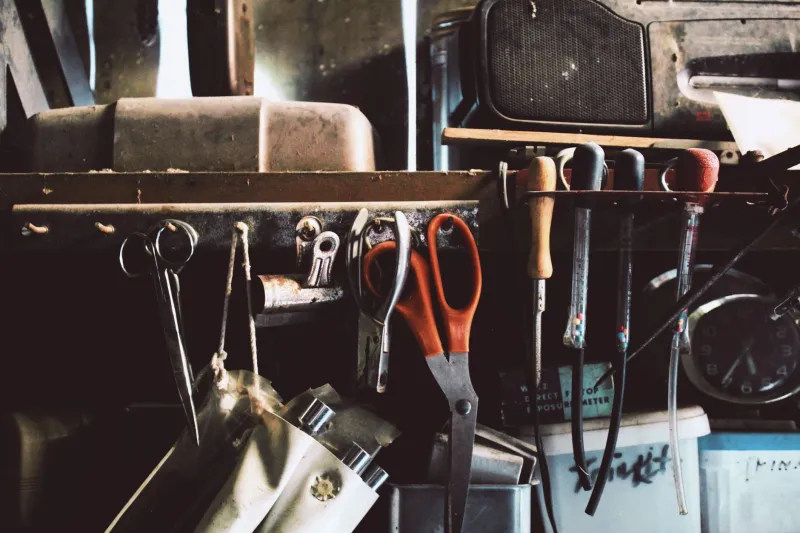
There's a moment a lot of makers know well. You're standing in a craft store aisle, staring at a $200 price tag on a tool you'll use maybe twice a month, doing the mental math and feeling vaguely insulted. For a lot of folks, that moment ends with a reluctant swipe of the credit card. But for a growing underground of tinkerers, builders, and creative engineers, it ends with something way more satisfying: I'll just make one myself.
This is the tool rebellion, and it's picking up serious steam.
Why the Market Isn't Working for Makers
Here's the thing about commercial craft tools — they're designed for the average user. That sounds reasonable until you realize that "average" usually means beginner-friendly, mass-produced, and priced with a healthy markup for branding and retail shelf space. If you're a working maker with specific needs, unconventional materials, or a workflow that doesn't fit the instruction booklet, you're often paying premium prices for a tool that's only halfway right for the job.
That mismatch is exactly what's driving people into their garages and workshops to engineer something better. Online communities on Reddit, Discord, and independent forums are full of threads where makers swap notes on modified machines, 3D-printed jigs, and frankenstein setups cobbled together from salvaged parts. It's not just frugality — though saving a few hundred bucks never hurts. It's about ownership. When you build your own tool, you understand it completely. You can fix it, improve it, and make it do exactly what you need.
Profiles in Rogue Engineering
The Plotter Modder
Out of a spare bedroom in Asheville, North Carolina, one textile artist got fed up with the limitations of consumer vinyl cutters. The blade pressure was inconsistent on thicker materials, the software was clunky, and replacement parts cost almost as much as a new machine. So she cracked it open, replaced the control board with an open-source alternative, and rewrote the cutting parameters from scratch. Now her setup handles everything from delicate rice paper to heavy leather — and she's shared her modification guide with over 3,000 people online for free.
"The company doesn't want you to know the hardware is capable of way more than they let it do," she told a community forum. "Once you take the lid off, literally and figuratively, everything changes."
The $40 Laser Guy
Over in a suburb outside of Columbus, Ohio, a woodworker and electronics hobbyist built a functioning laser engraver from scratch using a salvaged DVD drive motor, an Arduino microcontroller, and a frame made from aluminum extrusion sourced from a local scrap yard. Total cost: around forty dollars and a weekend of tinkering. Commercial equivalents start at three or four hundred. He documents every build on a no-frills blog, complete with wiring diagrams and parts lists, and the comment section reads like a hall of fame for people who've replicated his design across the country.
The Loom Hacker
In rural Vermont, a fiber artist outgrew her rigid heddle loom but couldn't justify the $1,500 price tag on the floor loom she actually wanted. Instead, she spent three months researching historical loom construction, sourced hardwood from a local sawmill, and built a full four-shaft floor loom using hand tools and a lot of patience. It's not perfect — she'll tell you that herself — but it's hers, she knows every joint and peg, and she's already planning version two.
The Philosophy Behind the Build
What ties all of these stories together isn't just resourcefulness. It's a specific kind of philosophy that's very much in the Craftin' Outlaws spirit: the idea that creative tools should serve the maker, not the other way around. Commercial products come with assumptions baked in — assumptions about how you'll use them, what materials you'll work with, and how much deviation from the norm is acceptable. Building your own blows all of that up.
There's also something deeply satisfying about the meta-layer of it. Making a tool to make a thing means your creative fingerprint is embedded in the process at every single level. The object you produce didn't just come out of your hands — it came out of a machine your hands also built. That's a kind of authorship that no off-the-shelf product can touch.
Ready to Go Rogue? Start Here
You don't need an engineering degree or a fully stocked workshop to start hacking your kit. Here are a few entry points that makers swear by:
Modify before you buy. Before dropping money on a specialty tool, ask yourself if something you already own can be adapted. A lot of commercial jigs and guides can be replicated with scrap wood, clamps, and a little geometry.
Dig into open-source hardware communities. Sites like Instructables, Hackaday, and the r/DIY and r/MakerSpaces subreddits are treasure troves of documented builds. Somebody has almost certainly already engineered the thing you need — or something close enough to reverse-engineer.
Start with 3D printing. If you have access to a printer (many public libraries and makerspaces have them), custom jigs, guides, handles, and adapters are incredibly low-cost to produce. Even a simple custom presser foot for a sewing machine can transform what a machine is capable of.
Document everything. One of the most powerful things about the tool-building community is the culture of sharing. When you figure something out, write it down and put it somewhere public. The collective knowledge base grows every time someone does.
The Real Cost of Convenience
There's a version of this conversation that's purely about money, and yeah — building your own tools can save you a lot of it. But the deeper argument is about something else. When you rely entirely on commercial products, you're also relying on someone else's decisions about what's possible. You're trusting a product manager in a boardroom to define the boundaries of your craft.
The makers building their own gear aren't just being cheap. They're refusing to accept those boundaries. And in doing so, they're often pushing their work into territory that commercially-equipped makers can't follow — because the tools to get there don't exist yet.
That's the whole point. The best tool for a rule-breaker is usually the one the rules never anticipated.
So next time you're standing in that aisle doing the mental math, maybe the answer isn't on the shelf.