No Permission Needed: How Indie Makers Are Burning the Brand Playbook and Building Something Better
There's a moment a lot of makers know well. You're sitting in a fluorescent-lit conference room, pitching your work to a buyer from some massive retailer, watching them flip through your catalog with the same energy they'd use to scroll a takeout menu. They like it. They want exclusivity. They want you to change the colorway, lower the price point, and oh — can you deliver 5,000 units by March?
That's the moment Dani Reyes decided she was done.
"I'd spent six years doing product development for a craft supply company," says Reyes, who now runs Feral Thread, a hand-dyed textile label out of Albuquerque, New Mexico. "I knew how the machine worked. I knew exactly what I was giving up by feeding into it. So I stopped."
Reyes isn't alone. Across the country, a generation of makers — many of them with deep industry experience, others just starting out — are rejecting the traditional retail pipeline and building their own brands from scratch. No wholesalers. No minimum order quantities dictated by someone else's spreadsheet. No brand guidelines written by a committee that's never held a craft knife.
Just their work, their name, and a direct line to the people who actually want it.
The Old Model Was Never Built for Makers
Here's the dirty secret of the craft industry: the traditional retail model was designed to benefit everyone except the person who made the thing. Wholesalers take their cut. Retailers mark it up. By the time your hand-poured candle hits a boutique shelf, you're lucky to see 30 percent of what a customer pays for it — and you're still responsible for the packaging, the shipping to the distributor, and the liability if something goes sideways.
For years, makers accepted this because there wasn't a real alternative. You either played by the rules or you sold at farmers markets forever.
Then the internet broke the whole thing open.
Platforms like Shopify, Etsy, and Big Cartel gave makers a direct storefront. Print-on-demand services like Printful and Gooten let textile and apparel designers launch full product lines without holding a single unit of inventory. Social media — particularly Instagram and TikTok — handed creators a free marketing channel that, used right, can outperform a full-page ad in any trade publication.
The gatekeepers didn't disappear. But suddenly, you didn't have to knock on their door.
Meet the Outlaws Running Their Own Shows
Marcos Bell left his job as a packaging designer at a mid-size craft brand in Atlanta two years ago to launch Brute Supply Co., a line of screen-printed goods and hand-stamped leather accessories. His wholesale inquiry emails still come in. He ignores most of them.
"I spent a decade making other people's brands look good," Bell says. "I know what I'm worth. I know what my margins look like if I go direct. Why would I hand a chunk of that to someone who's just going to stick my stuff between two other brands on a shelf?"
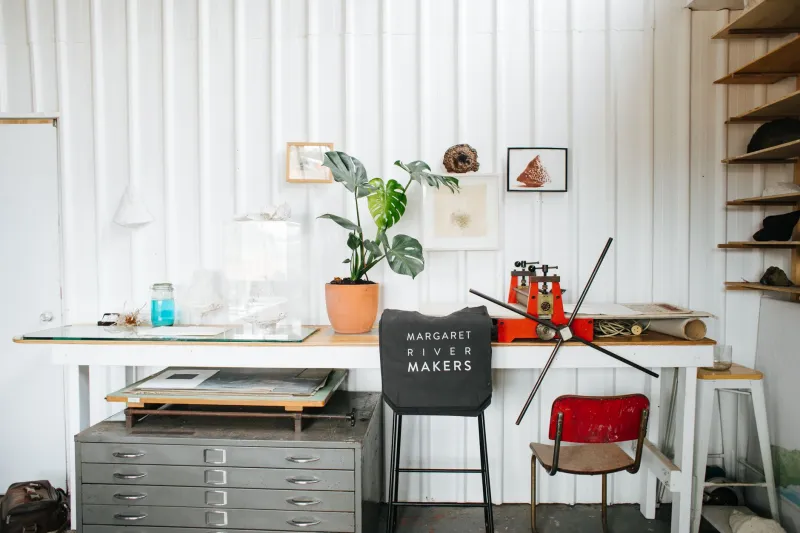
His operation is lean by design — a converted garage studio, a reclaimed light table he rebuilt himself, and a mailing list of around 4,000 customers he's cultivated over two years. He does two product drops a year, sells out within days, and earns more than he did at his corporate gig.
In Portland, Oregon, a collective of five ceramic artists called Kiln Riot took a slightly different approach. Rather than launch individual brands, they pooled resources to build a shared identity — one website, one social presence, one story — while each member maintains creative autonomy over their own work.
"People connect with the collective first, then they find the individual maker inside it," says collective co-founder Priya Nair. "It gives us the marketing muscle of a brand without any of us having to become a full-time social media person."
It's a model that's catching on. Shared brand umbrellas — loose collectives with a unified aesthetic and a rotating cast of makers — are popping up everywhere from Denver to Detroit, offering indie artists the visibility of a label without surrendering creative control.
The Tech Stack That Makes It Possible
You don't need a business degree to pull this off. The tools available to independent makers right now are genuinely staggering compared to even five years ago.
Print-on-demand has been a game-changer for makers working in apparel, paper goods, and home textiles. Design something on a Tuesday, have it live in an online shop by Wednesday, and never touch a box of inventory. Services like Printify and Gelato have expanded their product catalogs dramatically, meaning you can build a full brand presence — tote bags, art prints, throw pillows, apparel — without a warehouse or a bulk order minimum.
For makers selling physical goods they produce themselves, platforms like Faire — originally built for wholesale — have started adapting to accommodate smaller independent brands, though plenty of makers are skipping it entirely in favor of direct-to-consumer setups that keep more money in their pockets.
Email lists remain the single most valuable asset an indie maker brand can build. Social media algorithms are fickle. A list of 2,000 engaged buyers who've opted in to hear from you? That's yours. That doesn't disappear when a platform changes its rules.
The Mindset Shift Is the Hard Part
None of this is without friction. Running your own label means wearing every hat — designer, marketer, customer service rep, accountant, shipping department. The makers who thrive are the ones who get honest with themselves early about which parts of that they can handle and which parts they need to delegate or learn.
Dani Reyes says the biggest adjustment wasn't the workload. It was the permission structure.
"In a corporate environment, there's always someone to approve things," she says. "Someone to greenlight the new colorway or sign off on the copy. When it's your brand, you're the one who decides. That's terrifying and it's also the whole point."
For makers who've spent years operating inside someone else's creative framework, building a brand from scratch is as much a psychological project as a business one. You're not just launching a product line. You're deciding, out loud, that your aesthetic sensibility is worth something. That your name belongs on the label.
Spoiler: it does.
So What's Stopping You?
The barriers to launching an independent maker brand have never been lower. The tools are accessible. The platforms exist. The audience — hungry for authentic, handmade, personality-driven goods in a sea of algorithm-optimized sameness — is out there looking for exactly what you make.
What the traditional retail model offered was reach and legitimacy. What it took in exchange was control, margin, and creative freedom. More and more makers are doing that math and deciding the trade-off isn't worth it.
Burn the playbook. Build your own. The shelf space you're looking for is the one you set up yourself.